SBAA786 February 2026 AMC3302-Q1 , LM25180-Q1 , LM5181-Q1 , SN6507-Q1 , UCC25800-Q1 , UCC34141-Q1 , UCC35131-Q1 , UCC5881-Q1
This application brief provides an overview of Electrically Excited Synchronous Machines (EESM), the current trending e-machines inside automotive electrification, and provides a system proposal for the excitation circuit from Texas Instruments.
Introduction
One of the most used machines in automotive industry today are Permanent Magnet Synchronous Machines (PMSM), due to efficiency and high-power density, followed by AC Induction Machines, mainly used as front drive machines. Current trend is driving OEMs more towards EESM. One of the primary reasons is the reduction of rare-earth materials, which mitigates the environmental concerns, but also supply risk and cost unpredictability.
Working Principle of Electrically Excited Synchronous Machines
EESM and PMSM operate on the same principle of synchronous rotation, where both stator's rotating magnetic field and rotor's magnetic field rotate at the same speed.
As in a PMSM, stator rotating field is generated by three-phase AC currents in the stator winding. On the other side, instead of the permanent magnets, EESM has the field windings mounted on the rotor. DC current is supplied to excite the windings either via slip rings and brushes or electrically, through brushless excitation circuit. Once the current is applied, these windings behave like electromagnets, and the rotor generates a fixed magnetic field.
Synchronization occurs through magnetic locking between these two fields. When these fields are aligned, electromagnetic torque is produced, and the torque tries to reduce angular displacement between them. The rotor accelerates or decelerates until both fields rotate at the same speed.
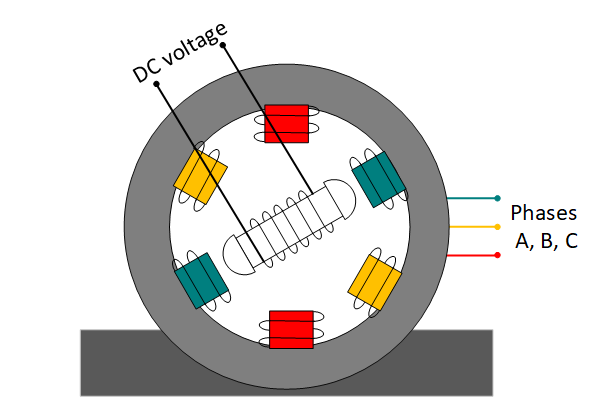 Figure 1 Electrically Excited Synchronous Machine
Benefits of Electrically Excited Synchronous Machines
One of the primary drives towards EESM is the reduced reliance on rare earth materials. By eliminating the permanent magnets, EESM avoid the use of rare earth elements, leading to improved supply security and sustainability.
Unlike PMSM, EESM allows simple rotor flux control, by adjusting the field current. Therefore, this type of machine enables easier field weakening control, ensuring almost constant power range and higher efficiency at higher operating speeds.
Another key advantage is that, under fault conditions, this type of machine does not introduce significant back electromotive force (back-EMF). When the fault occurs, zero field current is requested, and this zero current also brings rotor flux to zero. On that way the safe state is enabled easier compared to PMSM. However, additional circuitry and software control are needed to control the excitation current.
System Design for Excitation Circuitry
The operation of EESM requires additional excitation circuity besides the standard inverter topology. This circuity is used to supply and control the rotor field current and verify safe and reliable operation. Since it directly influences the machine operation, it requires an ASIL level according to ISO28282.
Figure 2 shows an example of excitation circuit for the conductive EESM, where the brushes make physical contact with the slip rings bringing DC current to the field windings.
This contains two power switches and two diodes, connected between HV+ and HV-. The full DC link voltage is applied to the rotor windings when both switches are conducting. If only one switch is conducting, current decreases slowly, whereas when both are open the current decreases through freewheeling diodes.
Typical maximum current of these switches does not exceed 50A. Control signals are provided from isolated gate drivers, supplied by isolated bias supply. In addition, one or two current sensors are required for the closed-control loop, as this current is directly proportional to the magnetic field and directly influences the behavior of the machine.
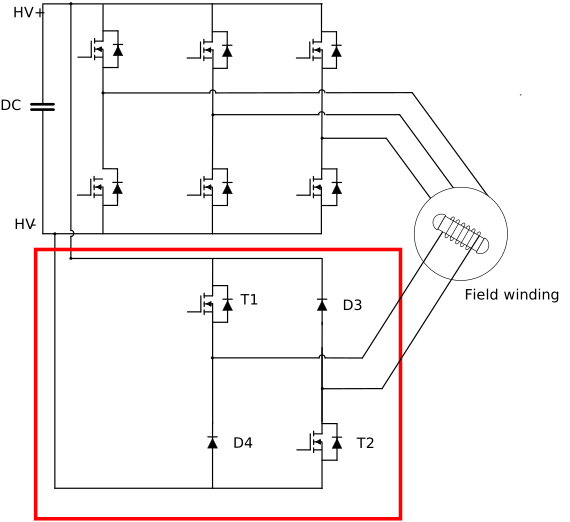 Figure 2 Additional Excitation Circuit
Device selection is essential, as it has a direct impact on the performance, reliability and efficiency of the machines. This system relies on fast switching, stable biasing and precise current feedback.
Figure 3 shows the proposed system design, where the selected devices enable compact implementation and high-precision control.
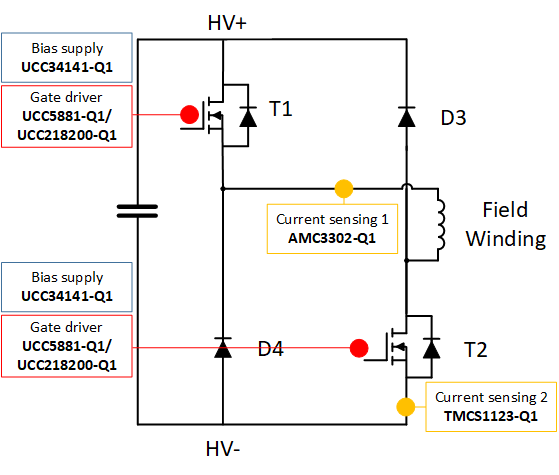 Figure 3 System Proposal for Excitation Circuit
UCC218200-Q1 is a standard isolated protection driver, which operates without SPI communication while still providing advanced features integrated to enhance functional safety. This driver features DESAT protection, output voltage gate monitoring comparators and built-in self-test (BIST) diagnostic during power up.
For further reduction of the overall design size, TI offers UCC5881-Q1, a programmable Functional Safety-Compliant isolated gate driver. Besides the features mentioned above, this gate driver offers even more features, such as active miller clamp, 2x ADC channels for secondary side sensing and adjustable gate drive strengths, making the design more compact and efficient.
Gate drivers can be powered from different isolated bias supply topologies. Depending on the topology, isolated bias supply can be connected directly to the LV battery, or via pre-regulator to the LV or/and HV battery using a DC/DC converter. UCC25800-Q1 is an ultra-low EMI transformer driver, used for Open-Loop LLC topology with up to 1.2MHz switching frequency. Another popular topology is Push-Pull, where TI offers SN6501-Q1 and SN6507-Q1 devices, with wide input voltage, from 3V to 36V. Even wider input range is enabled with LM5181-Q1 flyback converter, from 4.5V to 65V. With the wide input voltage, the pre-regulator can be removed. To future reduce the system size and weight, while simplifying the PCB routing, isolated DC/DC module with integrated transformer can be used. UCC34141-Q1 and UCC35131-Q1devices offer up to 1.5W and 2W output power.
Besides gate drivers and bias supplies, an important role has current sensing, as the accuracy and reliability directly influence flux control. The first approach is using the shut-based current sensing, with our latest AMC3302-Q1isolated amplifier. This device has input voltage range of ±50mV and features integrated DC/DC converter, enabling single-supply operation. Besides the amplifiers, TI offers also galvanically isolated hall-effect sensors. TMCS1123-Q1 has a 250kHz bandwidth and is capable of measuring up to 80A max continuous current featuring integrated overcurrent detection and ambient field rejection.
Besides the conductive EESM, shown on the previous figure, there are also inductive excitation circuits for EESM, where the excitation is transmitted using magnetic (inductive) coupling. The benefit of such a design is lower maintenance, although it has increased system costs.
Conclusion
EESM are emerging as a key technology for the automotive industry, improving high-speed efficiency and providing flexibility by direct flux control. In case of a failure, cutting the excitation current eliminates the risk of high back-EMF voltage or uncontrolled rotation. Although requiring additional excitation circuity, these machines are not relying on rare-earth materials, reducing the supply risk and machine cost. With properly designed excitation circuits using highly integrated and high-performance devices, EESM provides cost-effective designs for next generation of electric vehicles.
Trademarks
All trademarks are the property of their respective owners.